The NJILABO project aims to establish a high-performance microbiology laboratory in Mbujimayi, Democratic Republic of Congo (DRC). This facility will be essential for diagnosing serious infections and fighting against antibiotic resistance, which are of particularly high incidence in low-resource regions.
The laboratory will directly improve care for children with sickle cell disease as well as many other patients. It will also enable locally-led research to be carried out and allow Mbujiamyi to integrate a national monitoring network for antibiotic resistance.
We need your support to make this project a reality.
You can support the project by making a donation to the Munda ASBL account: IBAN: BE28 0689 4683 5720 – Reference: Don Njilabo
Or use the following QR code via your banking app:

In Belgium, for donations of €40 or more, a tax receipt can be issued. To receive a tax receipt, please send us your full contact details by completing this online form.
NJILABO: A microbiology laboratory paving the way to advance health in the heart of Kasai in the Democratic Republic of Congo
Why is antibiotic resistance such a critical issue today?
Antibiotic resistance is a global health emergency. In a report published in October 2025, the World Health Organization (WHO) once again sounded the alarm: in 2023, one in six confirmed bacterial infections was resistant to antibiotics.
Even more concerning, between 2018 and 2023, resistance increased for more than 40% of the bacteria-antibiotic combinations monitored. The regions most affected are those where healthcare systems already have the fewest resources.
What does the WHO recommend in response to this growing threat?
- Improved access to diagnosic tools
- More reliable surveillance systments
- Better access to appropriate treatments
In short : Better detection leading to better care.
Yet, in many low-resource countries, these essential tools are sorely lacking, making it impossible even to accurately assess the true extent of the problem.
Which patients are most vulnarable?
Children with sickle cell disease are among the most at risk.
Sickle cell disease – the most common genetic disorder in the DRC – causes red blood cells to become distorted, leading to intense bone pain and other severe complications, including an increased risk of serious infections.
In this context, the NJILABO project was born. But what exactly is NJILABO?
NJILABO – derived from Njila (“path” in Tshiluba) and laboratory – is an ambitious project to:
- Establish a high-performance microbiology laboratory in Mbujimayi and
- Train at least two specialized technicians.
Our goal: to change the lives of thousands of children in a province of 7 million inhabitants that currently has no reliable microbiology laboratory.
Why Mbujimayi ?
Because the city can rely on a key figure: Prof. Benoît Mbiya, a pediatrician trained at the Cliniques universitaires Saint-Luc (Brussels).
After returning to the DRC, Prof. Benoît Mbiya founded the Mbujimayi Pediatric Clinic, a center of pediatric excellence unique in the entire province.
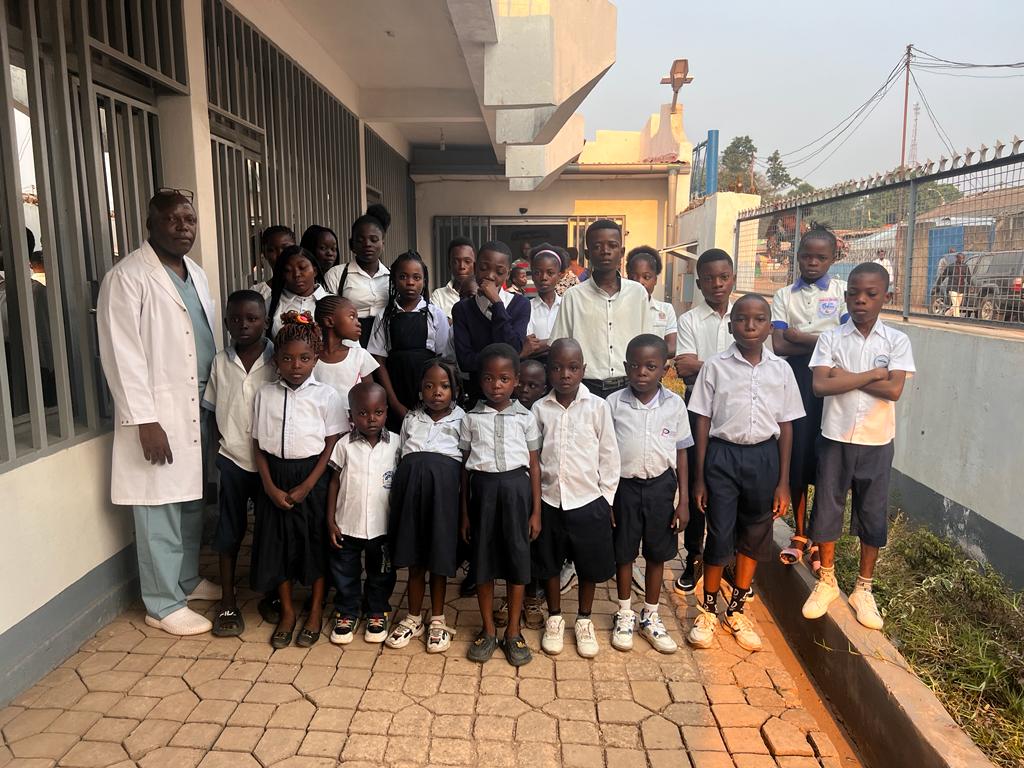
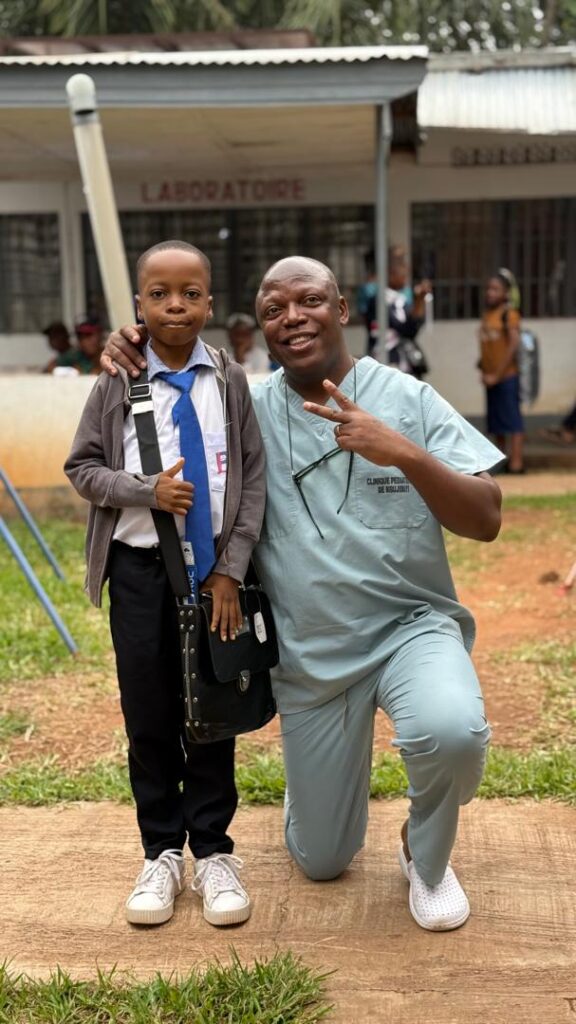

He also completed a PhD thesis at the Université libre de Bruxelles (ULB) on sickle cell disease and set up a monitoring program that has literally transformed the lives of children with sickle cell disease.
Today, he monitors more than 1,000 children, but lacks an essential tool: a laboratory capable of identifying the bacteria responsible for infections.
Who is behind the project?
NJILABO is led by the non-profit organization Munda (“inner strength” in Tshiluba), founded in 2022 by Caroline Van der Linden, François Schmidt, Virginie Van der Linden, and Dimitri Van der Linden.
The association is already active in the field with a mission to improve the medical, psychological, and social well-being of children. The organization has already developed several projects in collaboration with the Mbujimayi Pediatric Clinic.
What will the NJILABO laboratory enable?
The future laboratory will permit three major advances:
1. Better care
Rapid identification of the bacteria causing an infection and selection of the most appropriate antibiotic—a breakthrough for children with sickle cell disease and for all other patients.
2. Locally-driven research
Improved understanding of the epidemiology of infections leading to more effective empirical treatments adapted to the realities of the DRC.
3.Participation in national surveillance
Integration into a national DRC network to combat antibiotic resistance through harmonized protocols and reagents.
How can you support NJILABO?
A fundraising campaign with a target of €100,000 has been launched, centered around two flagship initiatives:
1. An exceptional concert – March 15, 2026, 5pm, Church of La Hulpe
Featuring Florian Noack, internationally renowned Belgian pianist.
Opening act by Dimitri Van der Linden, performing Haydn with the Chordae Novae string orchestra conducted by Monique Deside.
Info & tickets
2. A European cycling tour – from late March to late June 2026
Dimitri Van der Linden will cycle across Europe, from Thessaloniki to Stockholm.
In each country, he will give talks to farmers, veterinarians, and general practitioners to raise awareness about responsible antibiotic use and the alarming situation low-ressource countries.
In parallel, a general appeal for donations is underway. Every donation counts. Please also help by sharing, information, publications and news related to this project.
When will NJILABO become a reality?
The goal is clear: to implement the laboratory between late 2026 and early 2027, with a sustainable and collaborative approach and in close connection with partner laboratories across the country.
Thank you very much for your support !


Cover photo credit: Taylor Flowe (Unsplash).